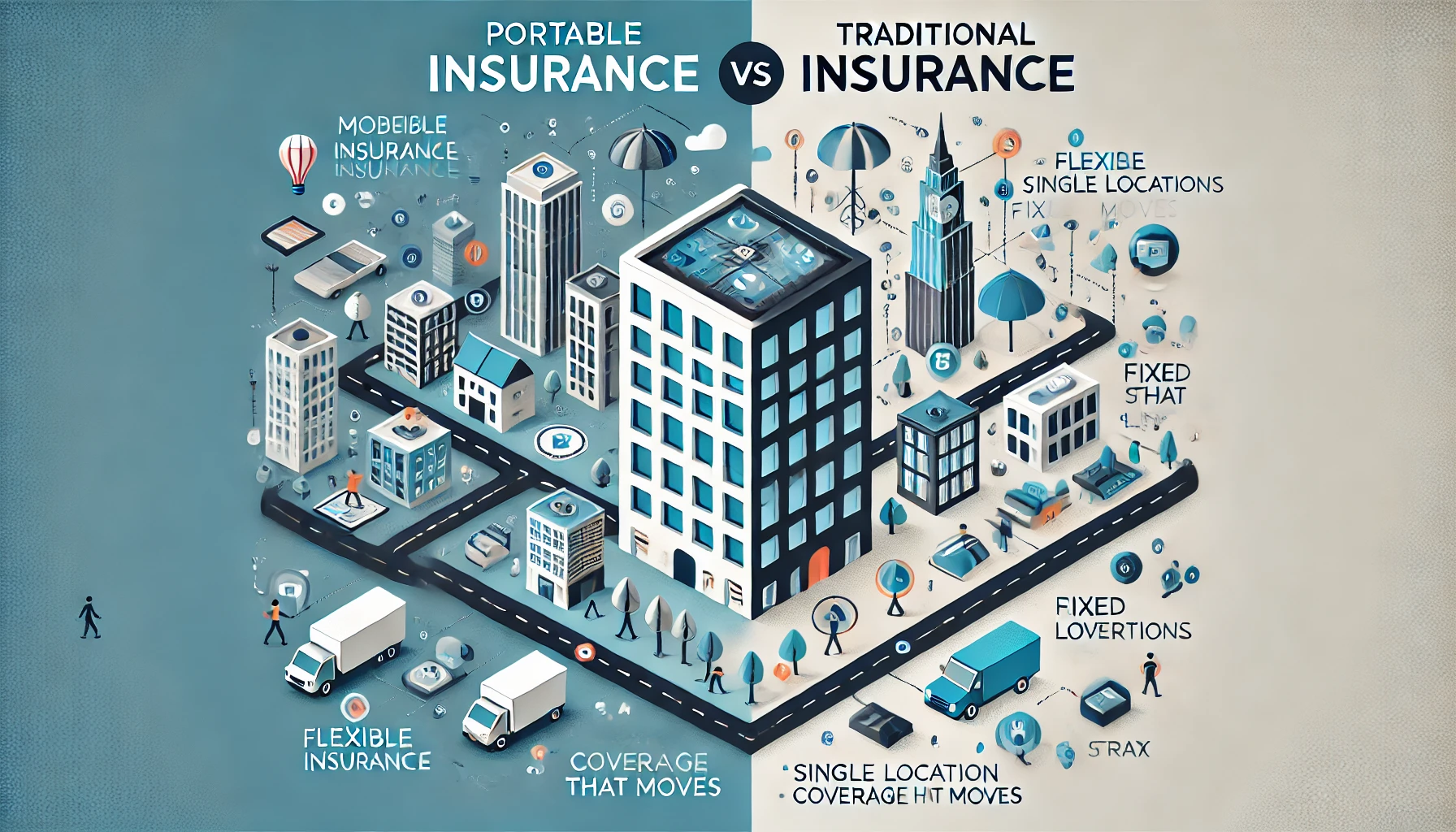
Portable insurance and traditional insurance represent two very different approaches to managing risk. The key difference lies in who controls the coverage and how long it lasts. Traditional insurance is usually tied to a specific employer, job, asset, or location, while portable insurance stays with the individual or business regardless of changes in work status, contracts, or geography. As work becomes more flexible, global, and project-based, understanding this distinction is essential for both workers and businesses.
What Is Traditional Insurance?
Traditional insurance is the long-established model most people are familiar with. Coverage is typically linked to a fixed relationship, such as employment with a company, ownership of a specific asset, or operation within a single location.
For example, employer-sponsored health insurance ends when an employee leaves the company. Business liability insurance may only apply to a registered office or named operation. Vehicle or equipment insurance often covers a specific asset used in a defined way.
This model works well in stable environments where jobs are long-term, roles are clearly defined, and business operations rarely change.
What Is Portable Insurance?
Portable insurance is designed for flexibility. The policy belongs to the individual or business, not the employer, platform, or single contract. Coverage continues even when work arrangements, clients, or locations change.
Instead of being tied to one job or asset, portable insurance is tied to the person, activity, or business function. A freelancer can change clients without losing coverage. A remote worker can move countries while staying insured. A gig worker can use multiple platforms under one policy.
This model reflects how modern work actually happens.
Why the Shift Toward Portable Insurance Is Happening
The workforce has changed faster than insurance systems. Remote work, freelancing, gig platforms, and short-term contracts are now mainstream.
Traditional insurance struggles in this environment because coverage gaps appear during transitions. Every job change can mean paperwork, waiting periods, or loss of benefits.
Portable insurance eliminates many of these gaps by offering continuity. This is why businesses, platforms, and independent workers are increasingly adopting it.
Key Differences Between Portable and Traditional Insurance
The most important difference is ownership. Traditional insurance is controlled by the employer or asset owner. Portable insurance is controlled by the insured individual or business.
Another difference is flexibility. Traditional insurance assumes stability. Portable insurance assumes change.
Administrative effort also differs. Traditional insurance requires frequent updates when roles or locations change. Portable insurance is designed to adapt without constant reconfiguration.
| Aspect | Traditional Insurance | Portable Insurance |
|---|---|---|
| Ownership | Employer or asset-based | Individual or business-based |
| Coverage Duration | Ends when relationship ends | Continuous |
| Flexibility | Low | High |
| Best For | Stable employment | Flexible or mobile work |
| Administrative Changes | Frequent | Minimal |
Use Cases for Traditional Insurance
Traditional insurance remains effective in many situations. Large organizations with long-term employees often rely on employer-sponsored benefits. Fixed-location businesses such as factories, retail stores, or offices benefit from location-based policies.
Employees who value predictable benefits and do not plan frequent job changes may prefer traditional insurance. It often comes with employer contributions, which can reduce personal costs.
For these scenarios, traditional insurance remains practical and cost-efficient.
Use Cases for Portable Insurance
Portable insurance is ideal for freelancers, gig workers, consultants, and remote professionals who work with multiple clients or platforms.
It also suits startups and fast-growing businesses that expect frequent changes in workforce size, structure, or location.
International workers, digital nomads, and cross-border teams benefit from portable insurance because it reduces coverage disruptions caused by relocation.
Cost Considerations
Traditional insurance often appears cheaper because employers subsidize premiums. However, the true cost can increase during job changes, gaps in coverage, or when benefits are lost.
Portable insurance usually requires the individual or business to pay directly. While this can feel more expensive upfront, it often provides better long-term value by avoiding coverage gaps and administrative friction.
The right choice depends on work stability, income predictability, and risk tolerance.
Pros and Cons of Traditional Insurance
Traditional insurance offers simplicity for stable employment and often includes employer contributions. Coverage terms are usually well-defined and familiar.
However, it lacks flexibility. Coverage may end abruptly during job changes. It may not work across borders or for non-standard work arrangements.
Pros and Cons of Portable Insurance
Portable insurance offers continuity, flexibility, and independence. It supports modern work patterns and long-term career mobility.
On the downside, individuals may bear more direct costs. Coverage limits and terms may be standardized, requiring careful review.
How to Decide Between Portable and Traditional Insurance
Start by assessing your work stability. If you expect frequent changes in jobs, clients, or locations, portability is a major advantage.
Consider who controls your benefits. If you prefer independence and long-term continuity, portable insurance aligns better.
Evaluate total cost, not just monthly premiums. Factor in coverage gaps, administrative effort, and risk exposure.
In many cases, a hybrid approach works best, combining traditional insurance where available with portable coverage to fill gaps.
Frequently Asked Questions
Can portable insurance replace traditional insurance?
In some cases, yes. Many independent workers rely entirely on portable insurance. Others use it alongside traditional coverage.
Is portable insurance only for freelancers?
No. It is also useful for remote employees, gig workers, startups, and global businesses.
Is traditional insurance becoming obsolete?
No. It still works well for stable, long-term employment, but it is no longer sufficient on its own for many modern work setups.
Conclusion: Choosing the Right Insurance Model
Portable insurance and traditional insurance serve different needs. Traditional insurance is built for stability, while portable insurance is built for change.
As work becomes more flexible, portable insurance offers continuity and control that traditional models struggle to provide. However, traditional insurance still plays an important role in stable environments.
The smartest approach is not choosing one blindly, but understanding how each model fits your work style, risk profile, and long-term goals. In a modern economy, flexibility is not just an advantage—it is a necessity.