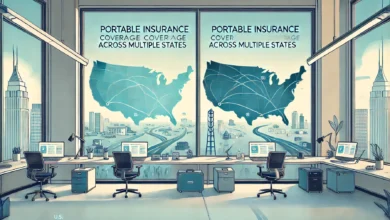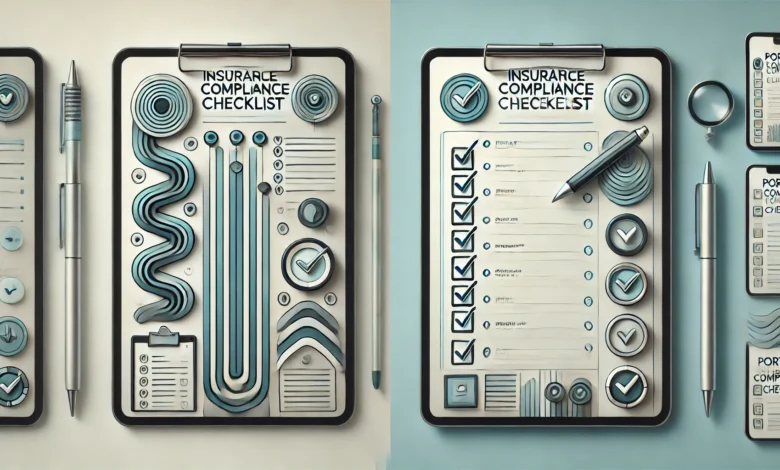
A portable insurance compliance checklist is a structured guide that helps businesses, freelancers, and multi-state operators ensure their portable insurance coverage meets legal, regulatory, and contractual requirements. In the first paragraph, it’s important to clarify that portable insurance is only effective when it is compliant. While portability offers flexibility across locations, projects, and clients, it also introduces complexity. This checklist exists to help organizations avoid coverage gaps, denied claims, regulatory penalties, and unexpected liability.
What Is Portable Insurance Compliance?
Portable insurance compliance refers to ensuring that insurance policies designed to work across locations, states, or work arrangements still meet all applicable legal and contractual requirements.
Unlike traditional insurance tied to a single location or employer, portable insurance must adapt to multiple jurisdictions, operating models, and risk profiles.
Compliance involves more than having a valid policy. It includes proper coverage limits, correct policy language, regulatory alignment, documentation, and ongoing monitoring as operations change.
Why a Compliance Checklist Is Essential
Portable insurance is often used by businesses operating across state lines, hiring remote workers, engaging contractors, or scaling rapidly.
Each of these scenarios introduces compliance risks, such as mismatched coverage territory, missing endorsements, or failure to meet state-specific requirements.
A compliance checklist provides a repeatable process to verify that insurance coverage remains valid, enforceable, and aligned with current operations.
Without a checklist, many organizations assume they are covered—until a claim is denied or a regulator intervenes.
Portable Insurance Compliance Checklist
1. Confirm Coverage Territory
Verify that the policy explicitly states coverage applies across all states or regions where you operate.
Look for language such as “nationwide,” “all U.S. states,” or clearly defined geographic territories.
Ensure there are no exclusions for specific states or jurisdictions.
2. Review State-Specific Regulatory Requirements
Insurance is regulated at the state level in the U.S.
Confirm that the insurer is licensed or authorized to provide coverage in each state where operations occur.
Check whether any states require specific policy language, minimum limits, or endorsements.
Workers’ compensation, in particular, often requires special attention.
3. Validate Required Coverage Types
Identify which insurance types are required based on your business model.
This may include general liability, professional liability, product liability, workers’ compensation, commercial auto, cyber liability, or employer liability.
Ensure portable policies cover all required risk categories without gaps.
4. Verify Coverage Limits and Aggregates
Confirm that coverage limits meet legal requirements, customer contracts, and realistic risk exposure.
Check both per-occurrence limits and aggregate limits.
Portable insurance often covers broader exposure, which may require higher limits than single-location policies.
5. Review Policy Exclusions Carefully
Portable policies may include exclusions related to geography, industry activities, or work types.
Identify exclusions that could affect multi-state or mobile operations.
Clarify whether exclusions apply differently across jurisdictions.
6. Confirm Workers’ Compensation Compliance
Workers’ compensation is one of the most complex areas of portable insurance compliance.
Confirm that employees working temporarily or permanently in other states are covered.
Check for “other states” coverage endorsements.
Determine whether separate state-specific policies are required for permanent operations.
7. Assess Contractor and Gig Worker Coverage
If you engage contractors or gig workers, confirm how they are covered.
Ensure portable liability policies clearly define who is considered an insured party.
Verify that misclassification risks are addressed, especially across states with different labor rules.
8. Check Client and Contractual Insurance Requirements
Review contracts with customers, partners, and platforms.
Confirm that portable insurance policies meet contractual requirements for coverage type, limits, additional insured status, and certificates.
Ensure compliance across all jurisdictions where contracts apply.
9. Confirm Policy Endorsements and Riders
Portable insurance often relies on endorsements to extend coverage.
Verify that all required endorsements are active and current.
Ensure endorsements reflect actual operations, not outdated assumptions.
10. Validate Certificates of Insurance (COIs)
Ensure certificates of insurance accurately reflect policy coverage, limits, and territories.
Confirm that certificates are updated when operations expand into new states.
Inaccurate certificates can create compliance and legal issues.
11. Review Claims Handling Across States
Confirm how claims are handled in different states.
Verify that the insurer has the capability to manage claims nationwide.
Understand reporting timelines and jurisdiction-specific procedures.
12. Assess Data Privacy and Cyber Compliance
For portable cyber and data insurance, verify compliance with state-level data protection laws.
Confirm coverage applies where data is stored, processed, or accessed.
Ensure incident response obligations align with regulatory requirements.
13. Maintain Documentation and Records
Keep copies of policies, endorsements, certificates, and correspondence.
Document compliance reviews and decisions.
Well-organized records support audits, claims, and regulatory inquiries.
14. Schedule Regular Compliance Reviews
Portable insurance compliance is not a one-time task.
Review coverage when entering new states, hiring remote workers, launching new products, or changing business models.
Annual reviews are a minimum best practice.
Cost and Risk Implications of Non-Compliance
Non-compliant portable insurance can lead to denied claims, fines, lawsuits, and operational shutdowns.
Financial exposure often far exceeds the cost of proper coverage and compliance management.
In multi-state operations, a single compliance failure can trigger cascading legal and financial consequences.
Portable Insurance Compliance vs Traditional Insurance Compliance
| Aspect | Traditional Insurance | Portable Insurance |
|---|---|---|
| Geographic Scope | Single location/state | Multi-state or mobile |
| Compliance Complexity | Lower | Higher |
| Policy Structure | Fixed | Flexible with endorsements |
| Review Frequency | Occasional | Ongoing |
Who Should Use This Compliance Checklist?
Businesses operating across multiple states.
Remote-first or distributed companies.
Freelancers and contractors serving clients nationwide.
Manufacturers, service providers, and logistics companies with mobile operations.
Startups planning rapid geographic expansion.
Frequently Asked Questions
Is portable insurance automatically compliant in all states?
No. Policies must be reviewed and structured to meet state-specific requirements.
Do I need a lawyer or broker for compliance?
Professional guidance is strongly recommended for multi-state operations.
How often should I review portable insurance compliance?
At least annually and whenever operations change.
Does portability reduce compliance responsibility?
No. It simplifies coverage but does not eliminate compliance obligations.
Conclusion: Making Portable Insurance Truly Work
Portable insurance offers flexibility, mobility, and scalability—but only when compliance is actively managed.
A structured compliance checklist transforms portable insurance from a perceived convenience into a reliable risk management tool.
By regularly reviewing coverage territory, regulatory requirements, limits, endorsements, and documentation, businesses protect themselves from costly surprises.
In a mobile, multi-state economy, portable insurance compliance is not optional—it is the foundation of sustainable, confident growth.